

LAUROYL CHLORIDE
General Information
Chemical Structure
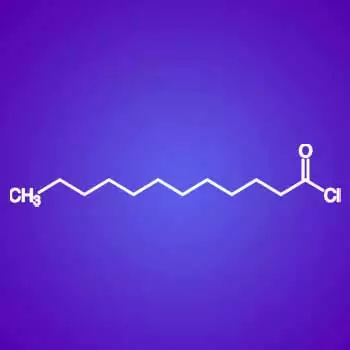
Basic Details
Physical Properties
Applications & Grade
Lauroyl Chloride is a crucial intermediate in the production of **Ethyl Lauroyl Arginate (LAE)**, a highly effective antimicrobial agent. Its applications span across several critical sectors:
- Intermediate for Ethyl Lauroyl Arginate (Food Preservative, Personal Care, Oral Care)
- Synthesis of surfactants and emulsifiers
- Production of pharmaceutical intermediates and cosmetic ingredients
- Used in polymer modification and agrochemicals
Ethyl Lauroyl Arginate (LAE) Major Applications:
- Food: LAE is used to extend the shelf life of food products by preventing microbial spoilage.
- Personal Care: It helps to preserve the integrity and stability of various formulations like creams, lotions, and hair products.
- Oral Care: LAE can be found in products like mouthwashes and toothpastes, contributing to oral hygiene.
Our Lauroyl Chloride is available in various grades to suit different industrial and research requirements, ensuring high purity and consistent quality for critical applications.
- **Cosmetics/Personal Care Grade:** Specifically refined to meet the purity and quality standards required for formulations in the cosmetics and personal care industries.
- **Technical Grade:** Suitable for industrial applications and general organic synthesis.
Product Specifications
| Property | Value |
|---|---|
| CAS Number | 112-16-3 |
| Synonym | n-Dodecanoyl Chloride |
| Molecular Formula | C12H23ClO |
| Molecular Weight | 218.77 g/mol |
| Appearance | Clear Colorless to pale yellow liquid |
| Purity By GC in Methyl Ester (area %) | 99% min. |
| Specific Gravity (20°C) | 0.91 - 0.94 |
| Impurity Profile | Available upon specific request |
Certificate of Analysis

(n-Dodecanoyl Chloride)
Appearance
Specification: Clear Colorless to pale yellow liquid
Results: Complies
Purity by GC (Methyl Ester)
Specification: NLT 99.0% (area %)
Results: 99.35%
Specific Gravity (20 °C)
Specification: 0.91 - 0.94
Results: 0.925
Impurity Profile
Specification: Available upon specific request
Results: No significant impurities detected
V.M.Patel (QC Chemist)
N.M. Shah (QC Manager)
V.Prasad (Technical Head)
Spectroscopic Analysis
Comparative IR Spectrum Analysis
📊 Comparative Analysis
Blue line represents CIA Standard, Red line represents your sample. Overlapping peaks indicate structural match and purity compliance.
🔬 Analysis Summary
Compound Identity: Lauroyl Chloride (n-Dodecanoyl Chloride)
Molecular Formula: C12H23ClO
Molecular Weight: 218.77 g/mol
CAS Number: 112-16-3
Structural Match: ✅ Excellent correlation between standard and sample spectra
Key Functional Groups Confirmed:
- ✅ C=O stretch (acid chloride) at ~1790 cm⁻¹
- ✅ Aliphatic C-H stretching (~2920, 2850 cm⁻¹)
- ✅ Long aliphatic chain vibrations
- ✅ C-Cl stretch
Quality Assessment: Sample matches standard reference with high fidelity. All characteristic peaks present with appropriate intensities.
🎯 Major Peak Assignments
GC Chromatogram
GC Chromatogram for Lauroyl Chloride will be available soon.
GC Analysis Summary (Placeholder)
The Gas Chromatography (GC) analysis will provide detailed information on the purity of the Lauroyl Chloride sample and the presence of any volatile impurities. This section will include the chromatogram, peak table, and sample information once the data is available.
Packaging, Handling & Storage
Packaging
- Typically supplied in sealed containers, such as HDPE drums (e.g., 200 kg) or glass bottles, depending on quantity.
- Containers are designed to prevent moisture ingress and maintain product integrity, often with a resistant inner liner.
- Available in various sizes to meet specific customer requirements (e.g., 1kg, 5kg, 25kg, 200kg).
Handling
- Handle in a well-ventilated area or under a fume hood to avoid inhalation of vapors or mists.
- **Avoid direct contact with skin, eyes, and clothing.** Lauroyl Chloride is corrosive.
- Wear appropriate personal protective equipment (PPE): chemical-resistant gloves (e.g., butyl rubber, Viton), safety goggles/face shield, and protective clothing. Use respiratory protection if exposure limits are exceeded.
- **Do not allow contact with water or moisture**, as it reacts violently and liberates toxic gas (hydrogen chloride).
- Use under inert gas (e.g., nitrogen) to prevent hydrolysis.
Storage
- Store in a cool, dry, and well-ventilated place.
- Keep containers tightly closed and sealed, protected from moisture and direct sunlight.
- Store away from incompatible materials: strong bases, oxidizing agents, water, alcohols, amines, and metals.
- Recommended storage temperature: Room Temperature (some sources suggest <15>
- Ensure containers are clearly labeled and stored in original containers with resistant inner liners.
Safety & Regulations
This section provides essential safety and regulatory information for **Lauroyl Chloride, CAS No. 112-16-3**. It is crucial to handle this chemical with appropriate precautions and in accordance with all applicable local, national, and international regulations.
Product Identification
GHS Classification
This product is classified according to the Globally Harmonized System of Classification and Labelling of Chemicals (GHS).
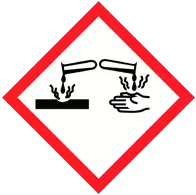
Corrosion
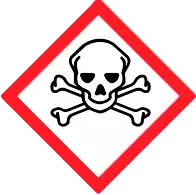
Acute Toxicity
Hazard Statements (H-codes):
- H314: Causes severe skin burns and eye damage.
- H290: May be corrosive to metals.
- H332: Harmful if inhaled.
- H302: Harmful if swallowed.
- H317: May cause an allergic skin reaction.
- EUH014: Reacts violently with water.
Precautionary Statements (P-codes):
- P260: Do not breathe dust/fume/gas/mist/vapors/spray.
- P264: Wash skin thoroughly after handling.
- P280: Wear protective gloves/protective clothing/eye protection/face protection.
- P234: Keep only in original container.
- P231+P232: Handle and store contents under inert gas. Protect from moisture.
- P271: Use only outdoors or in a well-ventilated area.
- P303+P361+P353: IF ON SKIN (or hair): Take off immediately all contaminated clothing. Rinse skin with water/shower.
- P305+P351+P338: IF IN EYES: Rinse cautiously with water for several minutes. Remove contact lenses, if present and easy to do. Continue rinsing.
- P310: Immediately call a POISON CENTER/doctor.
- P304+P340: IF INHALED: Remove person to fresh air and keep comfortable for breathing.
- P301+P330+P331: IF SWALLOWED: Rinse mouth. Do NOT induce vomiting.
- P363: Wash contaminated clothing before reuse.
- P390: Absorb spillage to prevent material damage.
- P405: Store locked up.
- P406: Store in corrosive resistant container with a resistant inner liner.
- P233: Keep container tightly closed.
- P501: Dispose of contents/container to an approved waste disposal plant.
Transport Information
Downloads
Safety Data Sheet (SDS)
Comprehensive safety information for handling and storage.
Certificate of Analysis (COA)
Batch-specific analytical results and quality assurance.
Technical Data Sheet (TDS)
Detailed product specifications and typical properties.
GC Analytical Report
Full GC chromatogram and peak analysis report.