

3-PHENYL PROPIONIC ACID CHLORIDE
General Information
Chemical Structure
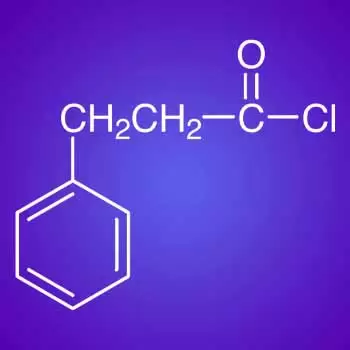
Basic Details
Physical Properties
Applications & Grade
3-Phenyl Propionic Acid Chloride is a crucial building block in the synthesis of various active pharmaceutical ingredients (APIs). Its high reactivity and specific chemical structure make it ideal for introducing the phenylpropionyl group into complex drug molecules.
- Intermediate for Bedaquiline (Anti-TB drug)
- Intermediate for Rasagiline (Anti-Parkinson drug)
- Intermediate for Nandrolone Phenylpropionate (Anabolic steroid)
- General organic synthesis in pharmaceutical manufacturing
As a versatile acid chloride, it finds application in the broader specialty chemical industry for the synthesis of various fine chemicals, agrochemicals, and other derivatives where a phenylpropionyl moiety is required.
- Synthesis of esters and amides
- Production of specialized polymers and resins
- Research and development in material science
Our 3-Phenyl Propionic Acid Chloride is available in various grades to suit different industrial and research requirements, ensuring high purity and consistent quality for critical applications.
- **Pharma Grade:** Meeting stringent purity standards for pharmaceutical synthesis.
- **Technical Grade:** Suitable for industrial applications and general organic synthesis.
Product Specifications
| Property | Value |
|---|---|
| CAS Number | 645-45-4 |
| Synonym | Hydrocinnamoyl Chloride |
| Molecular Formula | C9H9ClO |
| Molecular Weight | 168.62 g/mol |
| Appearance | Clear Colorless to light yellow liquid |
| Purity By GC (area %) | 99% min. |
| Density (GM/CC @20 °C) | 1.130 - 1.138 |
| Boiling Point | 105 - 108 °C |
| Melting Point | -7 to -5 °C |
| Flash Point: | 108 °C |
Certificate of Analysis

(Hydrocinnamoyl Chloride)
Description
Specification: Colourless to light yellow clear liquid, Pungent odour
Results: Complies
Solubility
Specification: Soluble in Alcohol, Acetone and Dichloro Ethane
Results: Soluble in Alcohol, Acetone and Dichloro Ethane
GM/CC (at 20 °C)
Specification: 1.130 - 1.137
Results: 1.131
Assay
Specification: NLT 98.0% w/w
Results: 99.10% w/w
Purity by GC
Specification: NLT 98.0 %
Results: 99.20 %
V.M.Patel (QC Chemist)
N.M. Shah (QC Manager)
V.Prasad (Technical Head)
Spectroscopic Analysis
Comparative IR Spectrum Analysis
📊 Comparative Analysis
Blue line represents CIA Standard, Red line represents your sample. Overlapping peaks indicate structural match and purity compliance.
🔬 Analysis Summary
Compound Identity: 3-Phenyl propionic acid chloride (Hydrocinnamoyl chloride)
Molecular Formula: C₉H₉ClO
Molecular Weight: 168.62 g/mol
CAS Number: 645-45-4
Structural Match: ✅ Excellent correlation between standard and sample spectra
Key Functional Groups Confirmed:
- ✅ Aromatic C=O stretch (acid chloride) at ~1775 cm⁻¹
- ✅ Aromatic C-H stretch at ~3030 cm⁻¹
- ✅ Aromatic C=C stretch at ~1600, 1500 cm⁻¹
- ✅ C-Cl stretch and aromatic substitution patterns
Quality Assessment: Sample matches standard reference with high fidelity. All characteristic peaks present with appropriate intensities.
🎯 Major Peak Assignments
GC Chromatogram for 3-PHENYLPROPIONYL CHLORIDE
Analysis Summary
Compound: 3-PHENYLPROPIONYL CHLORIDE
Analysis Date: Jun 12 2021 15:12:27
Total Area: 15053.810 mV-Sec
The Gas Chromatography (GC) analysis confirms the purity and composition of the 3-Phenylpropionyl Chloride sample. The major peak at 04:38 minutes corresponds to the main compound, showing a high purity of 99.744%.
Minor impurities are detected at 08:08 and 10:18 minutes, contributing minimally to the overall composition.
- High purity confirmed for the main compound.
- Minor impurities are within acceptable limits.
- Results comply with quality standards.
Peak Assignments
| Peak No. | RT (min.sec) | Height (mV) | Area (mV-sec) | Amount (% Area) | Name |
|---|---|---|---|---|---|
| 1 | 04:38 | 1090.062 | 15015.347 | 99.744 | 3-PHENYLPROPIONYL CHLORIDE |
| 2 | 08:08 | 1.152 | 18.928 | 0.126 | Impurity 1 |
| 3 | 10:18 | 1.106 | 19.535 | 0.130 | Impurity 2 |
Packaging, Handling & Storage
Packaging
- Typically supplied in sealed containers, such as HDPE drums or glass bottles, depending on quantity.
- Available in various sizes (e.g., 1kg, 5kg, 25kg, 200kg) to meet specific customer requirements.
- Containers are designed to prevent moisture ingress and maintain product integrity.
Handling
- Handle in a well-ventilated area or under a fume hood.
- Avoid direct contact with skin, eyes, and clothing.
- Wear appropriate personal protective equipment (PPE): chemical-resistant gloves (e.g., butyl rubber, Viton), safety goggles/face shield, and protective clothing.
- Avoid inhalation of vapors or mists. Use respiratory protection if exposure limits are exceeded.
- Do not allow contact with water, as it reacts violently.
Storage
- Store in a cool, dry, and well-ventilated place.
- Keep containers tightly closed and sealed, protected from moisture and direct sunlight.
- Store away from incompatible materials (e.g., strong bases, oxidizing agents, water).
- Recommended storage temperature: 2-8°C (refrigerated) or as per manufacturer's specific guidelines.
- Ensure containers are clearly labeled.
Safety & Regulations
This section provides essential safety and regulatory information for **3-Phenyl Propionic Acid Chloride, CAS No. 645-45-4**. It is crucial to handle this chemical with appropriate precautions and in accordance with all applicable local, national, and international regulations.
Product Identification
GHS Classification
This product is classified according to the Globally Harmonized System of Classification and Labelling of Chemicals (GHS).
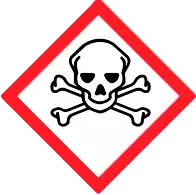
Toxic
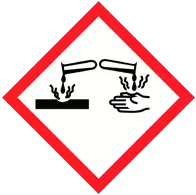
Corrosion
Hazard Statements (H-codes):
- H332: Harmful if inhaled.
- H314: Causes severe skin burns and eye damage.
- H290: May be corrosive to metals.
Precautionary Statements (P-codes):
- P260: Do not breathe dust/fume/gas/mist/vapors/spray.
- P280: Wear protective gloves/protective clothing/eye protection/face protection.
- P303+P361+P353: IF ON SKIN (or hair): Take off immediately all contaminated clothing. Rinse skin with water/shower.
- P305+P351+P338: IF IN EYES: Rinse cautiously with water for several minutes. Remove contact lenses, if present and easy to do. Continue rinsing.
- P310: Immediately call a POISON CENTER/doctor.
- P501: Dispose of contents/ container to an approved waste disposal plant.
Transport Information
Downloads
Safety Data Sheet (SDS)
Comprehensive safety information for handling and storage.
Certificate of Analysis (COA)
Batch-specific analytical results and quality assurance.
Technical Data Sheet (TDS)
Detailed product specifications and typical properties.
GC Analytical Report
Full GC chromatogram and peak analysis report.